Skip to content
TERRA INDICAIndia · Origin

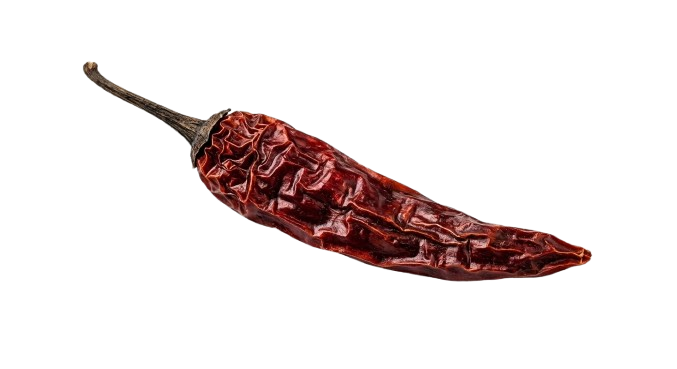
Guntur Sannam Chilli

Guntur & Prakasam districts · Andhra Pradesh

Handpicked from the farmersBought at origin, not at the port
Sourcing at origin
TERRA INDICAEST. 2016
001 — Origin

Every spice has a place.
We buy it there.

Nineteen Indian origins, each chosen because the crop is materially better there than anywhere else.

See all nineteen
Spices19 origins

Swipe for all 19. Tap a frame to open that origin.

002 — Context

The trade you are buying into.

India is the largest producer and the largest exporter of spices in the world. These are the numbers behind that sentence.

$4.45B

India's spice exports, FY 2024–25

The largest exporter of spices in the world.

12M t

Spice production, 2023–24

Madhya Pradesh 3.63 Mt · Gujarat 1.29 Mt · Andhra Pradesh 1.28 Mt.

+88%

Export volume growth since 2013–14

Compound growth across a decade of the trade.

60%+

Earnings from the top ten destinations

China, USA, UAE, Bangladesh, Thailand, Malaysia, UK, Saudi Arabia, Indonesia, Germany.

003 — Method

The mandi is a middle. We skip it.

Most spice leaving India has changed hands four times before it reaches a container. Every hand takes a margin and loses a record.

A worker sorting dried chillies by hand at a spice yard
Fig. 01
Sorting at the yard. Rejection happens here, at origin, rather than at the port.

A chilli grown in Guntur and a chilli grown in Byadgi are not the same product with a different postcode. One carries heat up to 350,000 Scoville units. The other carries almost none, and an ASTA colour value of 156.9 — the reason an extraction industry grew up around it.

Buying at origin is the only way to hold that difference intact. We contract directly with grower groups through the harvest window, take a reference sample from every lot, and keep the village, the grower and the harvest date attached to it all the way to discharge.

What direct sourcing actually means

  • Bought from the farmer families themselves — mostly at the farm, with no trader in the middle
  • Standing relationships with grower groups, cooperatives and farmer producer organisations, renewed season on season
  • A named buyer per region who speaks the language and is reachable between harvests, not only at one
  • Area and volume agreed with growers before sowing, so the supply is collaborated on rather than chased
  • Lot-level traceability: village, grower group, harvest date, retained sample
  • Rejection at source, so nothing is reconditioned to make a grade it never had
004 — Catalogue

Nineteen origins.

Each one has a reason it is on this list, a number that proves it, and a colour of its own.

Full catalogue
005 — Growers

Handpicked
from the farmers.

Fourteen thousand households grow Lakadong turmeric across forty-three villages. Kandhamal Haldi is organic because tribal growers there never used fertiliser in the first place. These are not suppliers we found on a directory — they are the reason the catalogue reads the way it does.

A grower holding a handful of freshly harvested grain
A woman carrying a basket of harvest through a field
14,000households, Lakadong alone
43villages in the Jaintia Hills
3,700hectares of Karewa at Pampore
14states we buy in
006 — How we buy

Straight from their hands.

No trader between the field and the container. The people who grow it sell to us, and what they hand over is what reaches you.

How we buy, in full

The purchase is direct

We buy from the people who grew the crop — farmer families, their grower groups, their cooperatives and farmer producer organisations. There is no trader between us and the field, which is why we can tell you the village a lot came from and why the price the grower gets is a number we can state.

Mostly at the farm itself

Most lots are bought at the farm or the village collection point, where the crop can still be seen on the ground it grew on. The rest are bought at the regional yard, in the open, against the day's rate. We say which of the two it was rather than calling all of it farm-gate.

One person they can reach, all year

Each region has a named buyer who speaks the language spoken there, and who is reachable between seasons and not only at harvest. Sowing plans, weather, disease, a price they have been offered elsewhere — the conversation runs year-round, on the phone and on WhatsApp, in whichever direction it needs to.

Supply is agreed with them, not extracted

Area and expected volume are worked out together before sowing, so a grower knows there is a buyer and we know there is a crop. Collaboration is the commercial arrangement, not a goodwill line — it is the only way the same grower sells us the good lot again next season.

007 — Services

Ten things we do.

Sourcing is the first of them. The rest is what turns a good lot into a shipment that clears.

All services
Farm workers moving through a cultivated field
01

Single-origin sourcing

The core of the business. We contract at the yard in the region the spice is named after, and the lot keeps its village, grower group and harvest date all the way to discharge.

A worker sorting dried chillies by hand
02

Grading to specification

Send us the spec sheet. We grade against it physically — ASTA, sieve size, purity, moisture, foreign matter — and reject at source rather than reconditioning to fit.

Cleaned coriander seed in a shallow bowl
03

Cleaning & sortex

Machine cleaning, destoning, gravity separation and colour sortex to 99.5% purity. The grade you contracted is the grade that gets stuffed.

Burlap sacks stacked in a storage room
04

Steam sterilisation

Saturated steam treatment to bring microbiological load inside destination limits, without irradiation and without ethylene oxide.

Finely ground turmeric powder
05

Grinding & blending

Whole spice ground to your mesh, or built into a blend against your formulation. Cryogenic grinding where volatile oil retention matters.

Filled sacks lined up in a warehouse
06

Private label & retail packing

Bulk in 25 kg and 50 kg, retail from 50 g upward with your artwork, barcodes and destination-compliant labelling.

008 — Geography

Nineteen places
on one map.

From the Cardamom Hills at 9°51′ N to the Karewa terraces above Pampore at 34°01′ N — almost the full latitude of the country. Different soils, different calendars, one buying standard.

19 origins across 14 states. Markers are the named town or district the trade refers to, not a state centroid.

The full register
009 — Process

Origin to discharge, in six moves.

Nothing here is unusual. It is simply done in the right order, every time.

The full process
Farm workers moving through a cultivated field01

Origin

We buy where the spice is grown, not where it is traded onward. Nineteen regions, each selected because the crop is materially better there than anywhere else.

A worker sorting dried chillies by hand at a spice yard02

Selection

Handpicked at the yard against a written specification. Colour, size, moisture and foreign matter are checked before anything is paid for.

Burlap sacks stacked in a storage room03

Processing

Cleaning, de-stemming, gravity separation and sortex to the grade the buyer contracted for. Steam sterilisation where the destination requires it.

A gloved hand holding a laboratory test tube04

Testing

Third-party laboratory analysis before shipment. Pesticide residue, aflatoxin, microbiological load and the assay that defines the grade.

A pen resting on a printed document05

Documentation

Phytosanitary certificate, certificate of origin, laboratory reports and shipping documents issued and cross-checked before the container is sealed.

Shipping containers stacked at a port terminal06

Shipment

Consolidated at port, sealed, and tracked to discharge. FCL and LCL, on FOB, CFR or CIF terms.

WhatsApp the deskRequest a quote